What is a gas booster and how does it work
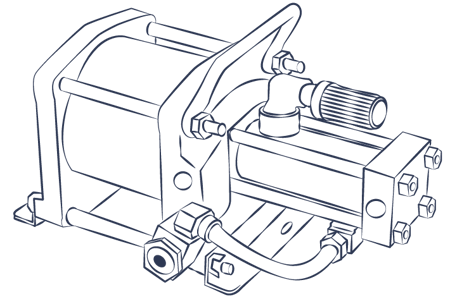
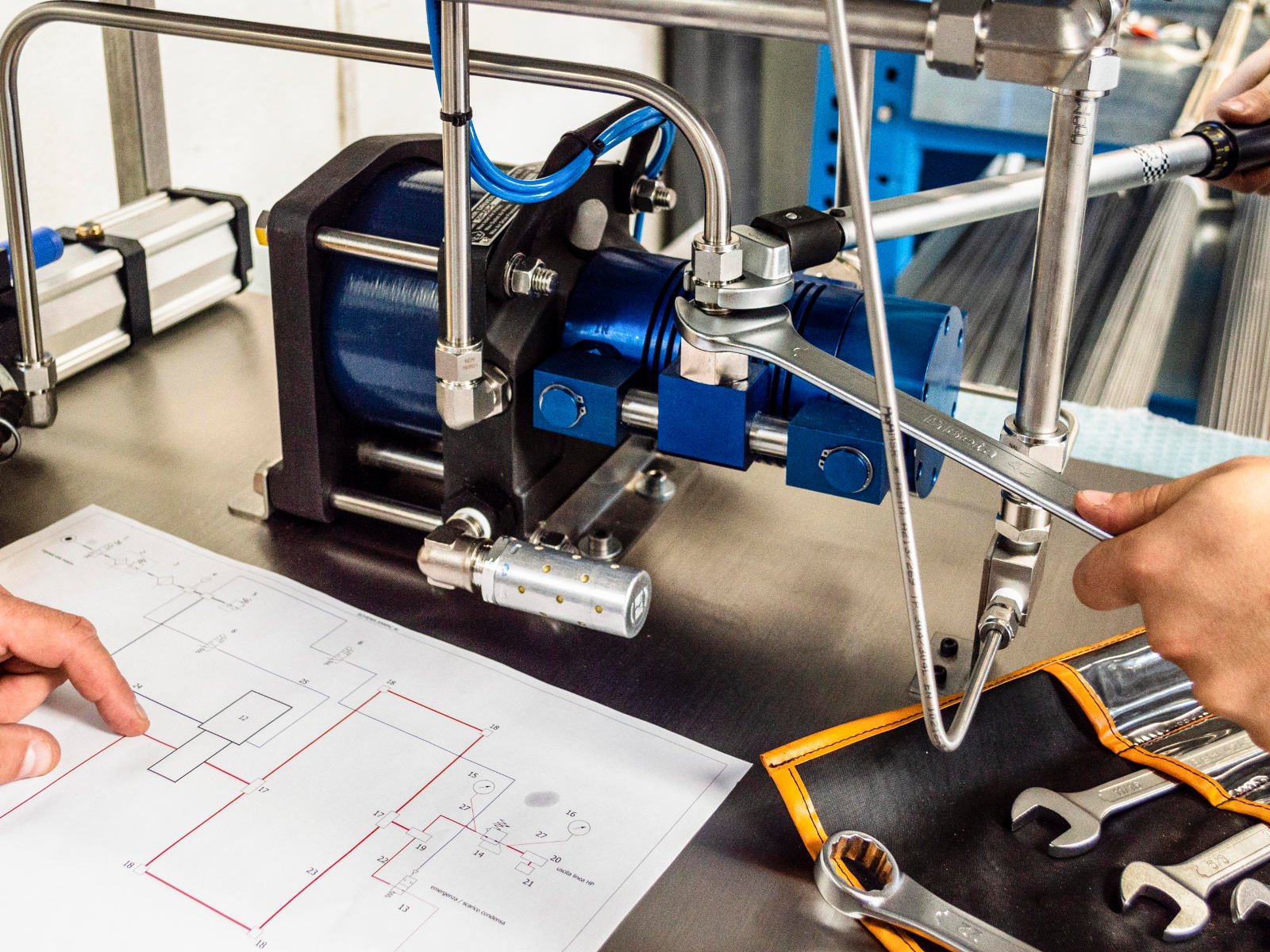
A gas booster (also called gas booster pump or gas pressure multiplier) raises the pressure of a gas well above the pressure of the supply source. In an air driven gas booster, a large piston driven by compressed air moves a smaller piston that compresses the gas: the ratio between the two areas sets how many times the pressure is multiplied.
When the outlet pressure reaches the set value, the booster stalls and holds the pressure without consuming energy, then restarts automatically if the pressure drops downstream. The gas section is separated from the air drive by a vented distance piece, so the process gas cannot be contaminated and cannot contaminate the drive air.
Types of gas boosters
| Type | Gases | Max pressure | Power source | Typical uses |
|---|
Air driven gas boosters
single acting, double acting, two-stage | Air, nitrogen, helium, hydrogen, oxygen and other gases | up to 2,069 bar (30,000 psi) | Compressed air, no lubrication | Cylinder filling, gas testing, helium leak testing, accumulator charging |
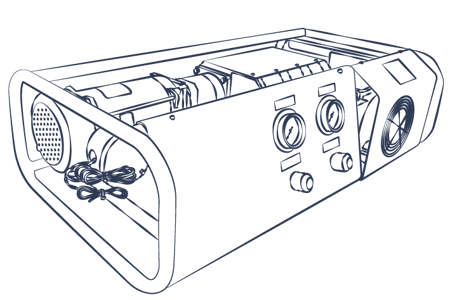
| Electric gas boosters | Almost all gases, including hydrogen | up to 1,000 bar | 2 HP electric motor | Plants without compressed air, constant flow as pressure rises |
Air amplifiers
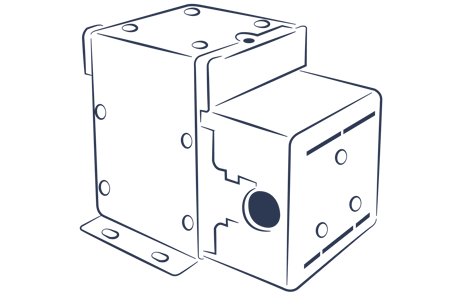
(pneumatic pressure amplifiers) | Air, nitrogen and inert gases | up to 350 bar | Compressed air | Raising air pressure at one point of the machine without a high pressure line |
For liquids such as water and oil, see our air driven liquid pumps, up to 80,000 psi.
Gas boosters by application
Hydrogen gas boosters
Air driven and electric gas boosters are available in dedicated versions for hydrogen, with materials and seals suited to H2. The HII electric gas booster reaches up to 1,000 bar and does not need compressed air, a key advantage for refuelling, test benches and research labs.
Helium boosters
Used to pressurize components for helium leak testing and to recover or top up helium, thanks to the non-contaminating design.
Nitrogen boosters
The most common use: charging hydraulic accumulators, filling cylinders, pressure testing valves, fittings and hoses.
Oxygen boosters
Oxygen service requires dedicated versions with specific cleaning and materials. Tell us the application and we will propose the correct configuration.
How to choose a gas booster
- Gas: inert gases such as nitrogen and helium, or hydrogen and oxygen, which need dedicated versions.
- Inlet and outlet pressure: together with the available drive air pressure, they define the booster ratio and the number of stages.
- Flow or volume: the volume to fill and the time available, for example a cylinder rack or a test component.
- Power source: if compressed air is not available or is expensive, an electric gas booster is often the most efficient choice.
- Hazardous areas: ATEX versions are available.
Gas booster FAQ
What is the difference between a gas booster and a compressor?
A gas booster multiplies an existing gas pressure, stalls when it reaches the set pressure and keeps the process gas separated from the drive, so it does not contaminate it. It is ideal for high pressures and small to medium flows.
What is the maximum pressure of a gas booster?
Up to 2,069 bar (30,000 psi) with air driven gas boosters, up to 1,000 bar with electric gas boosters and up to 350 bar with air amplifiers.
Do gas boosters need lubricated air?
No. HII and Sprague air driven gas boosters work with non-lubricated compressed air, so no oil mist is released into the environment.
Are ATEX gas boosters available?
Yes, ATEX versions are available for installations in potentially explosive atmospheres.
Why choose Interfluid
Tell us the gas, the inlet and outlet pressure and the volume to fill – request a free consultation.