What is a pressure multiplier
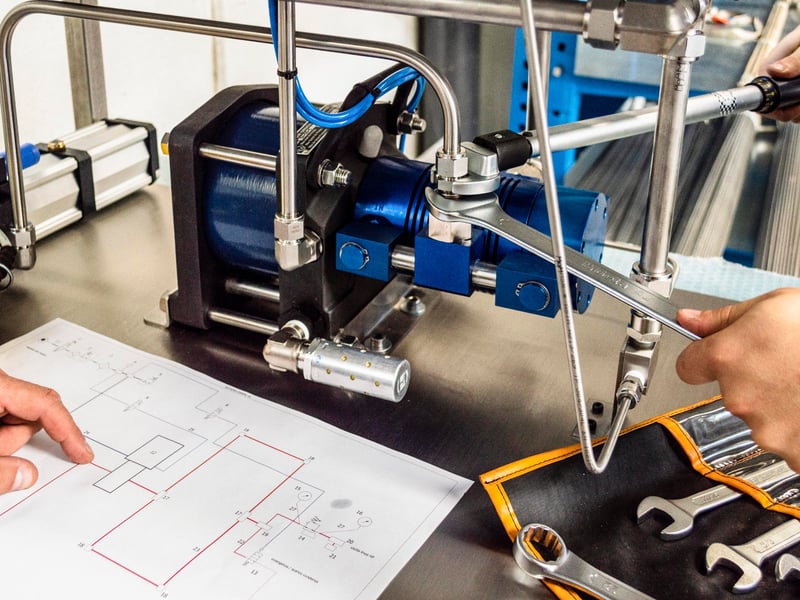
A pressure multiplier (also called pressure amplifier, intensifier or booster) converts a low supply pressure, usually plant compressed air, into a much higher output pressure. A large-diameter piston, driven by air, moves a smaller piston that compresses the fluid: the ratio between the two areas determines how many times the pressure is multiplied.
Once the set pressure is reached, the multiplier stops by itself and holds it without consuming energy; it restarts automatically if the pressure drops. That is why it is the typical solution for pressure testing, leak testing, clamping, accumulator charging and cylinder filling.
Which pressure multiplier do you need?
The choice starts from the fluid to be pressurised: air, technical gases or liquids such as water and oil.
| Type | Output fluid | Maximum pressure | Supply | Typical uses |
|---|
Air-to-air pressure multiplier
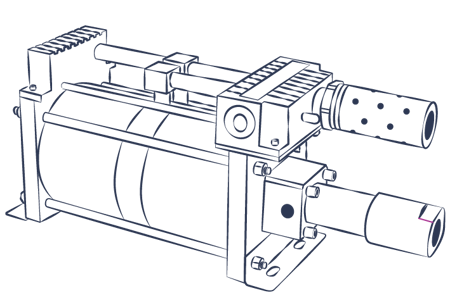
(pneumatic pressure amplifier) | Compressed air | up to 86 bar (1,250 psi) | Compressed air | Boosting the air network pressure at one point of the machine, testing and actuation |
Pressure multiplier for gas and nitrogen
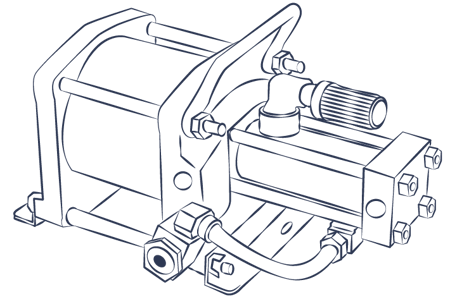
(air driven gas booster) | Air, nitrogen, helium and technical gases | up to 1,724 bar (25,000 psi) | Compressed air | Cylinder filling, gas testing, helium leak testing, accumulator charging |
Electric pressure multiplier for gas
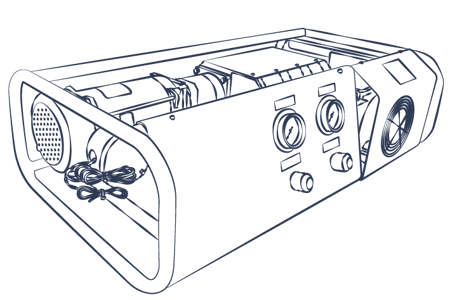
(electric gas booster) | Air, nitrogen and technical gases | up to 1,000 bar (14,500 psi) | 2 HP electric motor | Plants without compressed air, cylinder filling and topping up |
Air-to-oil and air-to-water pressure multiplier
(air driven liquid pump) | Water, oil, compatible fluids | up to 5,516 bar (80,000 psi) | Compressed air | Hydrostatic testing, clamping, hydraulic bolt tensioners, burst testing |
How to choose the right pressure multiplier
- Fluid: air, nitrogen and technical gases such as helium, or liquids. Oxygen and hydrogen require dedicated versions, materials and cleaning.
- Output pressure: the value to be reached and the available air pressure determine the multiplication ratio.
- Flow or volume: how much fluid has to be pressurised and in how long, for example the volume of a cylinder or of the component to be tested.
- Available supply: if compressed air is missing or insufficient, the electric gas multiplier is often the most efficient choice.
Pneumatic pressure multipliers need neither lubricated air nor an electrical supply, so they are easy to install even in harsh environments.
Multiplier power units and testing units
Besides individual multipliers, Interfluid designs and builds complete pressure multiplier power units for oil, water or gas, ready to connect: with HiP T-Series pumps up to 4,690 bar for liquids and with HII gas boosters up to 1,724 bar for gases. They are also available for rent.
Testing units › Gas testing units and multiplier power units › Rental ›
Frequently asked questions about pressure multipliers
What is the difference between a pressure multiplier, a pressure amplifier and a gas booster?
They all refer to devices that increase pressure. The term pressure amplifier is usually used for air (air-to-air multiplier), gas booster for technical gases and nitrogen, and air driven liquid pump or air-to-oil and air-to-water multiplier for liquids.
What is the maximum pressure that can be reached?
It depends on the family: up to 86 bar with air-to-air amplifiers, up to 1,000 bar with electric gas boosters, up to 1,724 bar (25,000 psi) with air driven gas boosters and up to 5,516 bar (80,000 psi) with air driven liquid pumps.
Is lubricated compressed air required?
No: pneumatic pressure multipliers work with non-lubricated compressed air and without an electrical connection.
Is there a pressure multiplier for nitrogen?
Yes: for nitrogen, air, helium and other technical gases, gas boosters are used, air driven up to 1,724 bar or electric up to 1,000 bar. To charge accumulators or cylinders, tell us the pre-charge pressure, the final pressure and the volume.
Are there versions for explosive atmospheres?
HiP T-Series air driven liquid pumps are available in an ATEX version. For the other multipliers, tell us the installation zone and we will check the solution.
Can they be used with hydrogen?
HII offers gas booster versions dedicated to hydrogen: the catalogues are on the gas booster pages. Tell us the pressures and flow and we will check the right model.
Why choose Interfluid
- Official Hydraulics International (HII) and HiP distributor
- Technical support with sizing, including P&ID review
- Custom-designed power units and test benches
- In-house test bench for testing and calibration
Tell us the fluid, the pressure to be reached and the volume to be pressurised: request a free consultation.